

INTRODUCTION
Climate change represents one of the greatest threats to sustainable development worldwide. Its widespread and unprecedented impacts weigh disproportionately on the poorest and most vulnerable - a significant number of whom live in Africa.
The most prominent global policy response to climate change is currently covered by the United Nations Framework Convention on Climate Change (UNFCCC). There is clear evidence that Africa is constrained by its limited capacity to effectively participate in the international political discourse on climate change to promote climate action at regional and national levels. Climate change diplomacy and negotiations are often technical and complex. It is difficult for new negotiators to fully understand the nuances of the process, even over a period of many years.
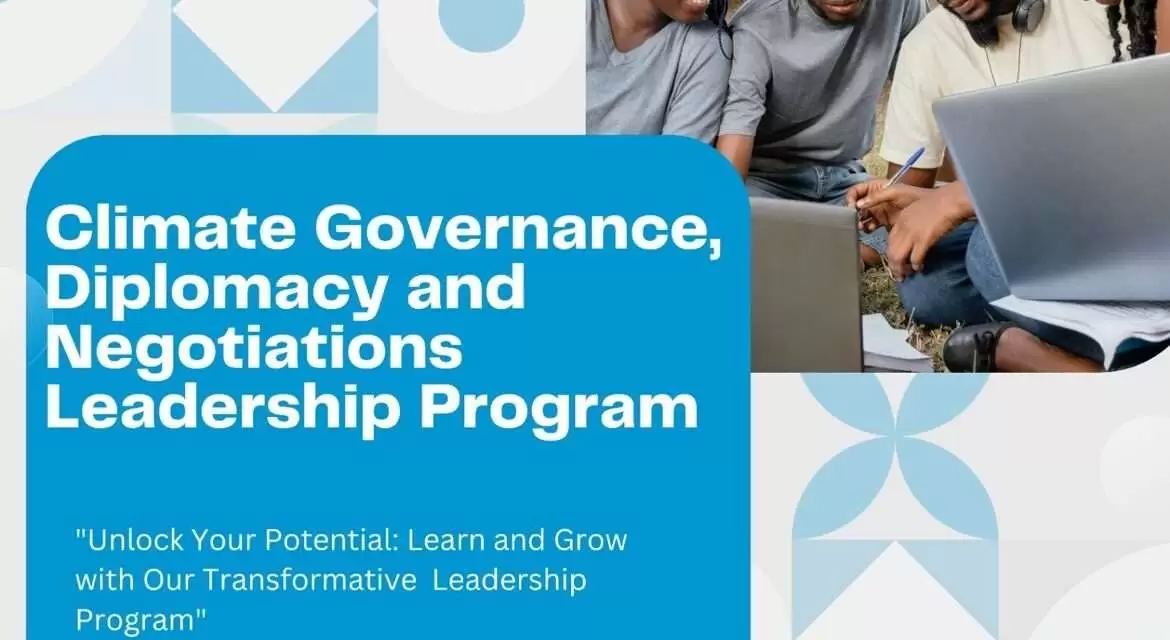
The African Group for Negotiators' Expertise Support (AGNES) has designed this training programme on climate governance, diplomacy and leadership in negotiations with a view to tackling this important continental challenge. This is a call for applications for eligible candidates.
OBJECTIVE AND EXPECTED LEARNING OUTCOMES
The overall aim of the Programme is to build and strengthen African climate leaders and improve their knowledge and negotiating skills to enable them to engage effectively in the international political discourse on climate change, as well as contribute to the successful implementation of climate actions at regional and national level.
TARGET GROUP
- Policy-makers who use climate science and are responsible for developing and implementing national and sub-national climate policies, programmes and projects;
- Scientists and climate professionals working in think tanks and academia;
- Climate change negotiators and international diplomats; representatives of non-state actors such as international and intergovernmental organisations, non-governmental organisations (NGOs) and the private sector working in the field of climate change and the environment;
- Jurists involved in climate change and environmental governance.
PROGRAMME CONTENT
The training is organised into ten modules, including:
- Module 1 - Physical Climate Sciences
- Module 2 - Climate Leadership, Communication, Diplomacy and Negotiations
- Module 3 - Climate Change Governance
- Module 4 - Article 6 of the Paris Agreement
- Module 5 - Climate Justice and Litigation
- Module 6 - Long-term, low-emission climate resilient development; Decision support tools
- Module 7 - Climate finance
- Module 8 - Development and Technology Transfer; Gender and Climate Change
- Module 9 - Climate Security
- Module 10 - Monitoring, Evaluation and Learning (MEL) and Measurement Reporting and Verification (MRV)

