

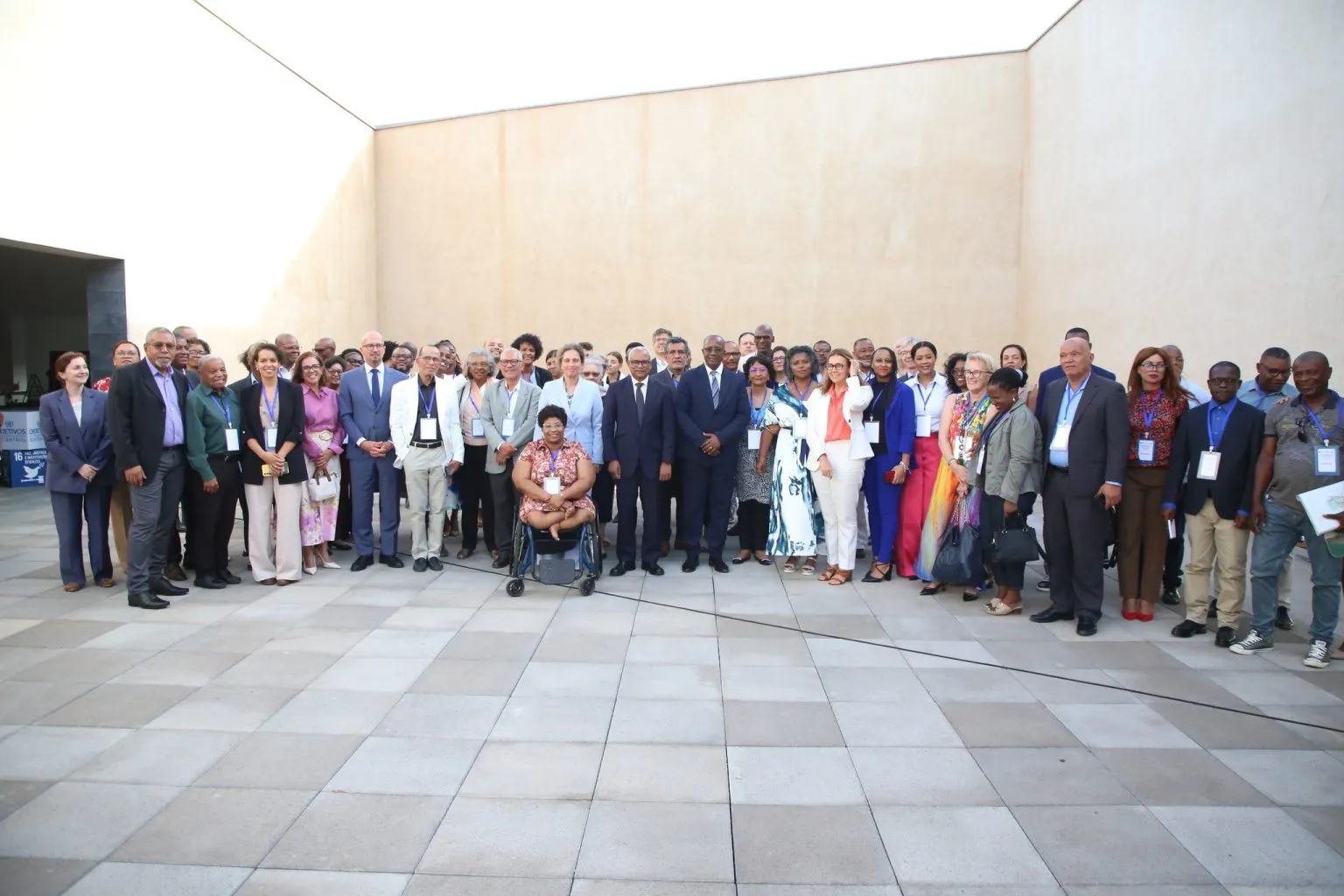
The expression is from Professor Rogério Roque Amado, Researcher at the University Institute of Lisbon (ISCTE/IUL), and was used during the National Meeting of Civil Society Organizations (ENOSC), organized by the NGO Platform, from April 6 to 8 at Techpark.
Translating his words, in Cape Verde the process of the Social and Solidarity Economy has been built through democratic and reciprocal solidarity that originates in the communities.
In a scenario where the State and international partners are calling for a new paradigm of intervention from Civil Society Organizations (CSOs), everything revolves around the need for CSOs to have the capacity to use their own voice to conduct policy advocacy.
While many organizations are actually doing the work that the State should be doing (for example, many NGOs that provide services to people with disabilities, a population that would otherwise have no access to care); others, such as the Social Development Hub/CUFA Cabo Verde, are dedicated to promoting social innovation, training through the Social Innovation Academy, promoting the creation of national and international consortia for participation in projects through the Innovation Lab, betting on the strength of citizens and Civil Society through the Kumunidadi movement, and scaling their partners to other opportunities through the creation of a social ecosystem via Comunidade365.
The issue of funding for our organizations is obviously a concern for everyone. In my view, it would make sense for organizations that are building citizenship to have appropriate funding from the state budget for that purpose. A fund that would be managed by civil society. Being constantly subject to project approvals makes it difficult for organizations to forecast their finances. However, I also advocate for the need to be structured to present social products and have a philosophy of social entrepreneurship. This has been our path.
Non-profit organizations pay taxes, salaries, and have expenses just like companies. What differentiates them is that they are created to solve social problems, while companies focus on being able to respond to a need (or, in many cases, on creating a need that motivates the purchase of their products). Given this assessment, it makes sense that the framework between the private sector and the public sector should have different financing scenarios. This is because one is based on the creation of personal wealth and the other on collective sharing.
The new paradigm proposed by the State is that it should be seen as a partner and not as a funder. The proposal is interesting; however, it needs to work, in the sense that the State would have to create spaces for a more open and frequent dialogue with Civil Society before making decisions.
The message I can leave you with is that, without a doubt, there has never been a sector as dynamic and innovative as the social sector in Cape Verde, where organizations have contributed significantly to building a country that is a world reference in stability, but at the same time still suffers in terms of subsistence resources.
Without a doubt, we need to be connected to the rest of the globe to survive as a small archipelago in the Atlantic. Undoubtedly, our international partners want to work with Cape Verde because we are an international benchmark. But who is building these bridges that make us a benchmark? I know that NGOs are making a great contribution, and it is with this inspiration from others that already have an enviable track record that we at the Social Development Hub/CUFA Cape Verde continue to fulfill our mission of providing them with the tools to adapt to this constant global transformation.
It is important not to forget that state budgets are financed by citizens, and the most developed societies always share a common characteristic: the strength of civil society.

