

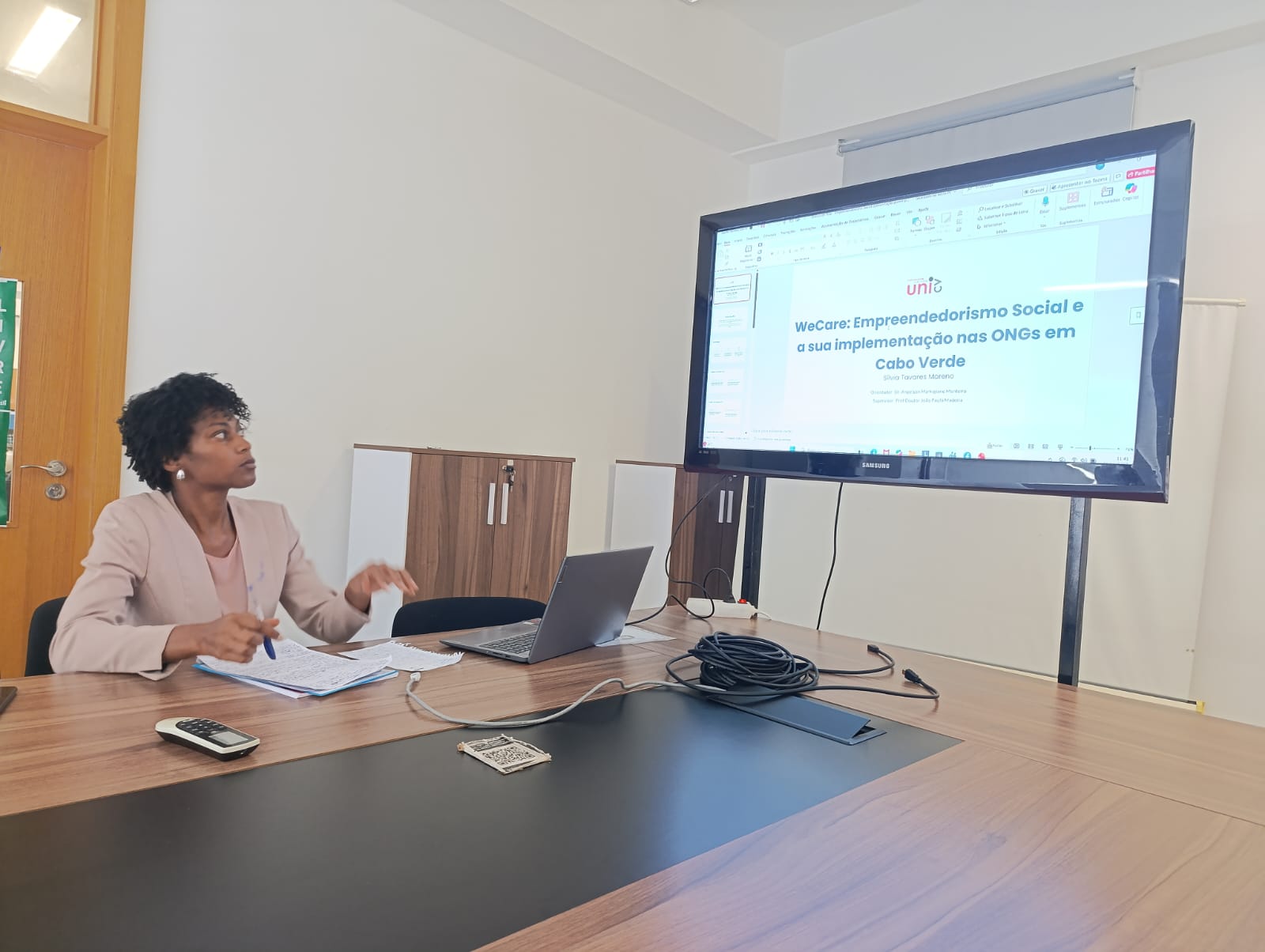
The former intern at WeCare, Silvia Tavares Moreno, has just presented an in-depth study on the social entrepreneurship and its decisive role in strengthening NGOs in Cape Verde. The work, carried out as part of her curricular internship, demonstrates how the experience gained within WeCare was crucial in understanding the Cape Verdean social ecosystem and proposing innovative paths for sustainable development.
During her internship, Silvia participated in the development of the strategic plan for the future. Social Development Hub (SDH) and conducted interviews and analyses that now form the basis of its scientific report. The study concludes that social entrepreneurship is one of the most promising avenues for transforming how NGOs operate, enabling them to achieve greater resilience, autonomy, and impact.
Based on this practical experience, the young researcher applied her analysis to the national context, identifying challenges such as dependence on donors, lack of technical training, and logistical difficulties arising from insularity. Even so, Sílvia argues that the country has great potential to strengthen the sector, especially through social business models, community innovation, and collaborative networks—practices that WeCare has been consolidating in the Cape Verdean landscape.
Reflecting on the conclusions of her study, Silvia states: "Social entrepreneurship in Cape Verde, although still in its development phase and facing logistical and qualification obstacles, is undeniably the most promising path for NGOs to ensure their resilience, autonomy, and long-term impact on the country's socioeconomic development."
Social entrepreneurship can also be an engine of social innovation that generates lasting social value through market mechanisms. He further indicated.
The case of WeCare, where Sílvia began her professional practice, is highlighted in the report as an example of a social enterprise that combines mission, sustainability, and innovation, making it an inspiring model for the Cape Verdean social sector.
With this study, the former intern reinforces the importance of training new professionals with skills in social entrepreneurship and impact management, contributing to the modernization and professionalization of NGOs in the country.
The undergraduate thesis was defended at the University of Cape Verde, as part of the Diplomacy and International Relations course, and received a grade of 18 out of 20.

